Need flooded basement cleanup in Harrisburg?
Seeing a damp wall or a wet basement? Send a request and we will point you to a local provider in our network who can explain your options.
No obligation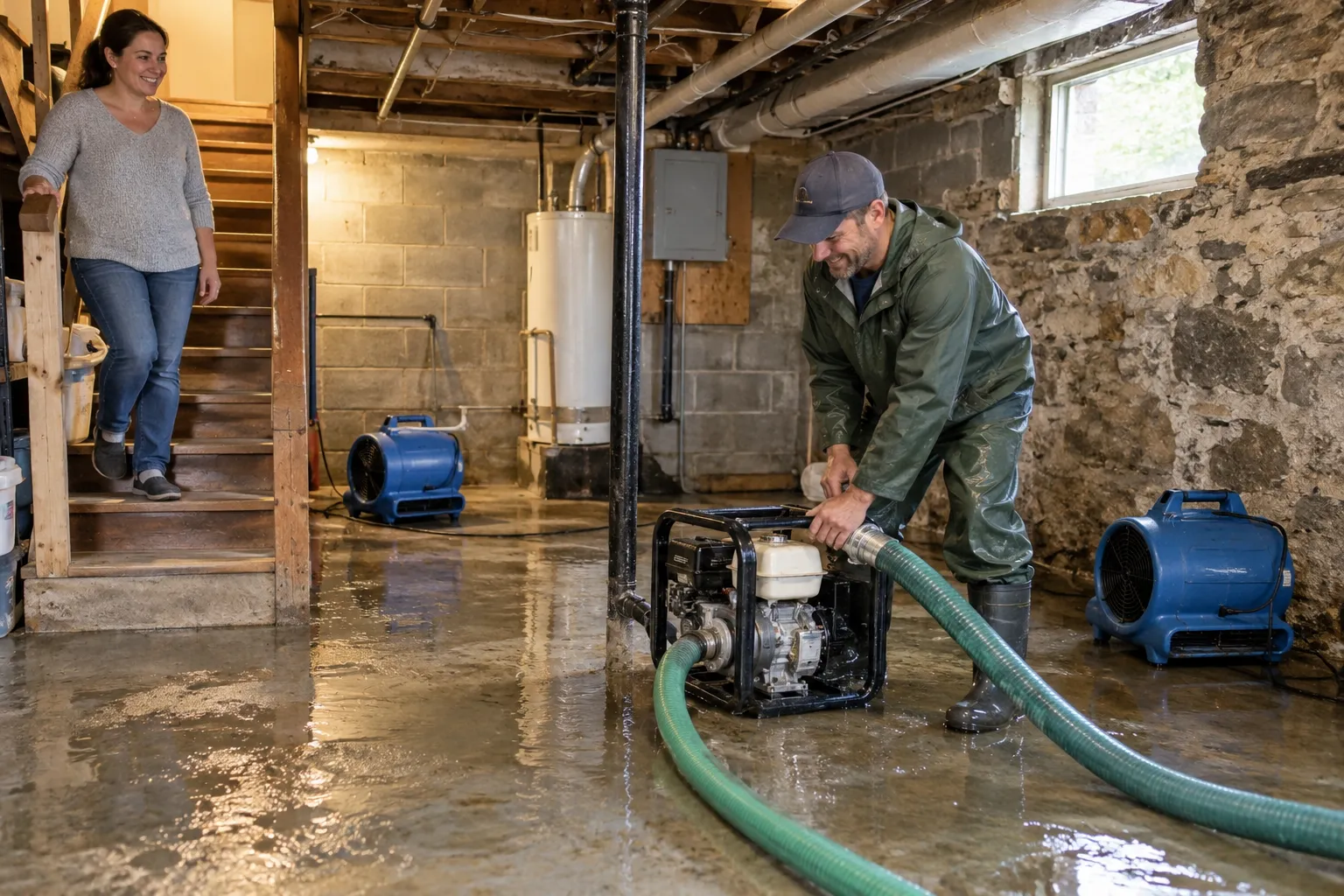
A flooded basement can start small. A damp corner, a musty smell, or a puddle by the sump pit is often the first hint. In the Greater Harrisburg area, snowmelt, heavy rain, and coastal storms push water against older foundations, and that water finds the weak spots.
Tripletopics Restoration is a referral service. We do not do the cleanup ourselves. We connect you with an independent provider in our network who can pump out water, dry the space, and clean what is left. This page explains the steps, so you know your options before anyone starts work.
You can also read about typical costs, what to expect on arrival, and how to document the damage. Then request an estimate when you are ready, with no obligation.
Before anything else, think about the people in your home. Standing water and electricity are a dangerous mix. If water is near outlets, the panel, or plugged-in appliances, stay out of the room.
If you smell gas, leave the house and contact your utility from outside. If the water is dark or smells bad, treat it as unsafe. It may carry sewage or other contaminants.
The source decides the next move. A provider will want to know, so look around before you phone anyone.
In snowy regions, spring melt sends water into the soil around the house. Stone and block foundations can let it in through joints and cracks. Water often shows up along the walls first.
A failed water heater, washing machine hose, or a burst pipe after a cold snap can fill a basement fast. If you can safely reach the shutoff valve, closing it stops more water from coming in.
Water rising from a floor drain is a different problem. It needs more careful handling and protective gear, so let a provider take the lead.
Wet materials start to change quickly. Drywall soaks up water like a sponge. Wood swells. Carpet and padding hold moisture long after the surface feels dry.
Mold can begin to grow in damp, warm spots within a couple of days. Many providers can respond quickly, and that helps keep a manageable job from growing. Emergency water damage repair is often about limiting how far the water spreads.
Small signs matter. Not every flood is a surprise. Look for these warnings, especially after thaws and storms:
Catching one of these early gives you more choices and often a smaller job.
Every home is different, but most jobs follow a similar path. A provider in our network will explain their own process, and it may include these parts.
Pumps and wet vacuums remove standing water. This is the first big step, because less water means less to dry.
Soaked carpet, padding, and some wall material may need to come out. Taking it out lets the structure dry properly.
Air movers and dehumidifiers pull moisture from floors, framing, and walls. Providers often use meters to check progress, so drying is based on readings and not guesses.
Surfaces are cleaned, and treated where needed, to cut down on odor and bacteria.
An unfinished basement with a concrete floor and bare walls is often simpler. Water can be removed, and the space dries faster.
A finished basement has more layers: flooring, insulation, drywall, and trim. Water can hide behind those layers. The provider may open small sections of wall to check, which is normal.
Many older homes have a mix of both, such as a finished family room next to a stone-walled utility area. Ask the provider to look at each area separately.
You do not have to decide everything at once. A good conversation covers what the provider will do first, what may need to be removed, and how long drying might take.
You can request an estimate and compare it with what you expected. Get the scope in writing so you know what is and is not included.
Sort items by how fast they are drying, not just how they look. Hard items like metal tools and plastic bins can often be cleaned. Cardboard boxes, upholstered pieces, and paper tend to be harder to save.
Set aside photo albums and important papers. Ask the provider what can be done for them, and keep a list of anything damaged.
Some policies may cover sudden damage, but flood and seepage coverage varies. Check your policy and ask your insurer what applies. Providers can often help document damage for a claim, so keep your photos and any receipts together.
The job is not done when the water is gone. Ask when the provider will check moisture levels again, and when it is safe to rebuild.
Then look at the cause. A clogged gutter, a downspout that dumps water by the wall, or a sump pump with no backup can bring the problem back. Small fixes now can save a lot of stress at the next big melt.
A clear answer to each one tells you a lot. If something is vague, ask again before you agree to work.
Pumps and wet vacuums clear standing water so drying can start sooner.
Wet carpet, padding, and damaged drywall may be taken out so the area dries well.
Air movers and dehumidifiers pull moisture from floors, framing, and walls, checked with meters.
Surfaces are cleaned and treated to reduce odor and bacteria.
Prices vary by job size, water type, and how long water sat. These are typical U.S. ranges, not quotes. Always get a written quote before work begins.
| Item | Typical range | Notes |
|---|---|---|
| Water extraction | $300 – $1,500 | Depends on depth and basement size |
| Structural drying | $800 – $3,500 | Equipment days and number of rooms |
| Carpet and padding removal | $500 – $2,000 | Based on square footage |
| Drywall cut-out and disposal | $600 – $2,500 | Varies with height of the wetting |
| Cleaning and sanitizing | $400 – $2,000 | Higher for sewage or dirty water |
| Mold testing or treatment | $500 – $3,000 | Only if growth is found |
Request a callback to check provider availability, or send the request form with a few details.
Describe the water, the source if known, and the rooms affected.
A provider explains the plan and gives a written quote for you to review.
If you agree, the provider removes water, dries the space, and cleans.
Providers in our network know older foundations, full basements, and seasonal water patterns.
We explain the likely next steps in plain words before any work begins.
Each provider runs its own business and does the work and sets its own quote.
Requesting an estimate does not commit you to hire anyone, so you can compare.
Seeing a damp wall or a wet basement? Send a request and we will point you to a local provider in our network who can explain your options.
No obligationStay safe first. Keep out of the water if outlets or appliances are near, and avoid the room if you smell gas. If you can safely reach it, shut off the water source. Take photos, then contact a local provider for help.
It depends on how much water came in and what materials got wet. Many jobs take several days. A provider can check moisture levels with meters and tell you when the space is truly dry.
It depends on your policy and the cause. Some policies may cover sudden damage, while seepage or groundwater often needs separate coverage. Check your policy, and ask a provider to help document the damage for a claim.
Seeing a damp wall or a wet basement? Send a request and we will point you to a local provider in our network who can explain your options.
No obligation