Need water damage restoration in Harrisburg?
Seeing a damp wall or a wet basement? Send a request and we will point you to a local provider in our network who can explain your options.
No obligation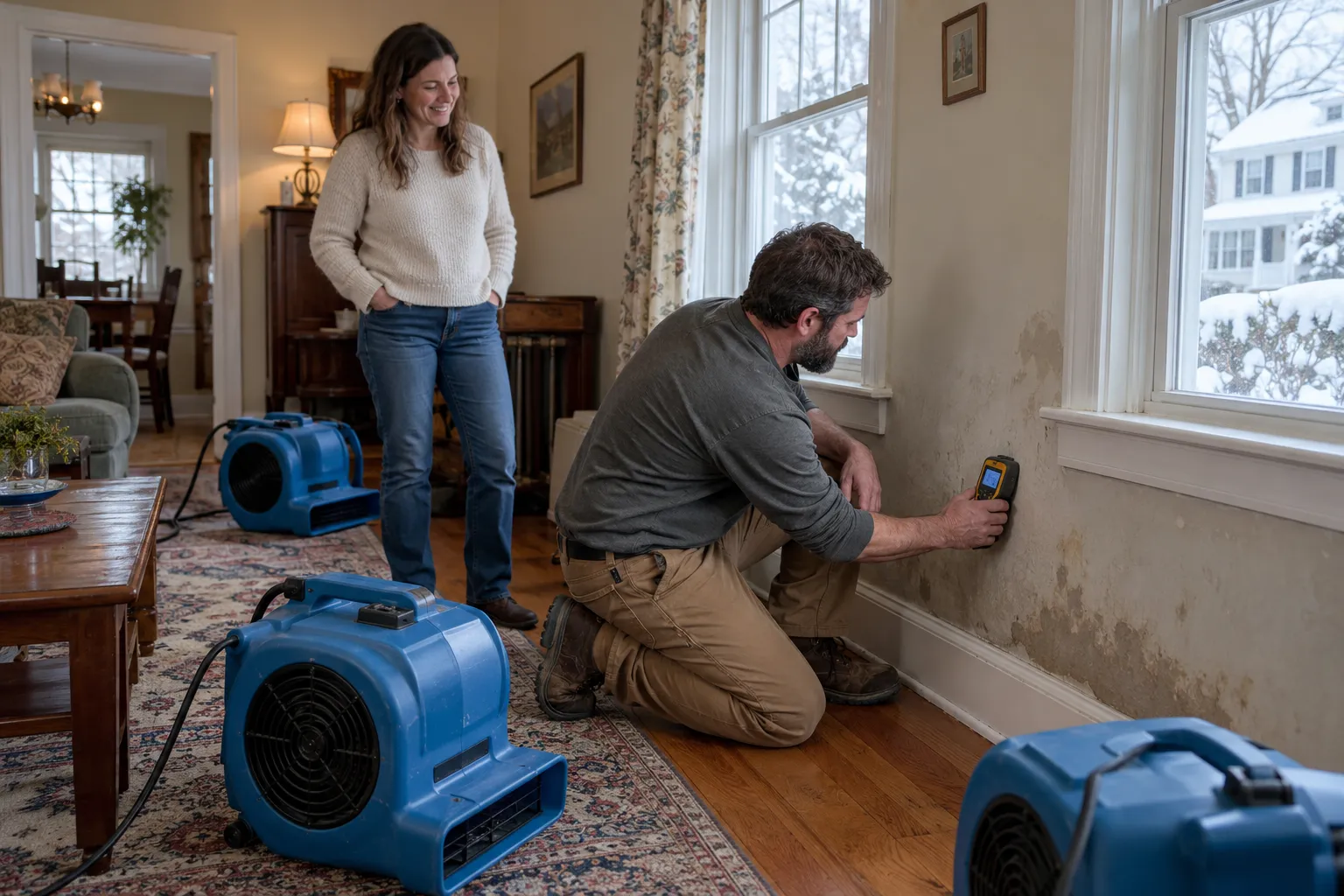
Request an estimate today
A damp spot on the ceiling. A musty smell in the hall. Paint that bubbles near a window. These small signs matter. In the Greater Harrisburg area, snowy winters, spring melt, and older homes can let moisture slip in quietly.
Tripletopics Restoration is a referral service. The work is not done by Tripletopics Restoration. Instead, we connect homeowners with independent local providers in our network who handle water extraction, structural drying, and repairs. This page explains the signs to watch for, the steps that usually follow, and the options you have before anyone starts work.
You will also see how to request an estimate, what to ask a provider, and how to document damage for a possible claim. Take a few minutes to read through it, then decide what fits your home.
Maybe a pipe let go. Maybe snowmelt found a crack in the foundation. Maybe a ceiling now has a brown ring that was not there last week. Whatever brought you here, the first move is the same. Stop the source if it is safe, then get a plan.
Tripletopics Restoration is a referral service for homeowners in the Greater Harrisburg area. We connect you with independent local providers who handle emergency water damage repair and drying. The provider does the work. We help you find one and understand what comes next.
Most water damage starts small. Catch it early, and the repair is often smaller too. Here are signs worth a closer look:
Any one of these can be minor. Two or three together deserve a closer look from a professional.
Safety comes first. If water is near outlets, appliances, or the electrical panel, stay away and shut off power only if you can reach the switch from dry ground.
These steps can limit the spread while you wait for a provider.
Water moves into wood, drywall, insulation, and carpet padding. The longer it sits, the deeper it goes. Damp materials can also start to grow mold, and many providers say that can begin within a couple of days in the right conditions.
In our region, cold snaps add another twist. Water that freezes inside a wall or crawl space can crack pipes and push gaps wider. Then the thaw sends more moisture in. Acting while the problem is still small keeps the job simpler.
Every home is different, but most jobs follow a similar path:
Some providers handle every step. Others handle drying and refer the rebuild. Ask which parts are included.
Providers often sort water into three groups. The group changes how the job is handled.
Clean water can turn into gray water if it sits long enough. That is one more reason to act early.
You do not have to decide everything at once. A good provider will explain the plan in plain words before starting. Ask these questions:
If the first answers feel unclear, you can ask another provider. There is no obligation when you request an estimate.
Many homes around the Greater Harrisburg area are older. Stone and block foundations, full basements, and classic Cape Cod rooflines all have their own quirks. Mortar can crack after repeated freeze-thaw cycles. Window wells can fill during spring melt. Coastal storms can drive rain sideways into places a gutter cannot reach.
A yearly walk-through helps. Check the basement walls after heavy rain, look at the attic after a snowy stretch, and scan ceilings under bathrooms. Small signs matter.
Some policies may cover sudden damage, such as a burst pipe, while slow leaks and flood events are often treated differently. Check your policy or ask your agent what applies to you.
Providers can often help document damage for a claim. Photos, moisture readings, and written notes are all useful. Keep receipts for any emergency steps you take on your own.
Look for a provider that answers your questions clearly and puts the scope of work in writing. Ask about local licensing and insurance requirements where you live, and ask the provider to show proof. Find out whether they use drying equipment and monitor progress with readings, not guesses.
Request a callback to check provider availability in your area. Availability and hours vary from one provider to the next.
Once the drying readings look right, the repair phase begins. That may mean new drywall, paint, flooring, or trim. Ask the provider what they handle and what needs a separate contractor.
After the work, keep an eye on the area for a few weeks. If a smell returns or a stain reappears, tell the provider early. A quick follow-up is easier than a second big job.
Pumps and vacuums remove standing water from floors and low spaces so drying can start properly.
Air movers and dehumidifiers dry walls, subfloors, and framing until readings look normal.
Moisture meters and cameras help find hidden wet spots and trace the source of the water.
Providers clean affected areas, remove ruined materials, and can often handle the rebuild or refer it.
Costs vary with the size of the area, the type of water, and how long it sat. These are typical U.S. ranges only. Always ask for a written quote before work begins.
| Item | Typical range | Notes |
|---|---|---|
| Inspection and moisture mapping | $150 – $500 | Often tied to home size |
| Water extraction | $300 – $1,500 | Depends on depth and area |
| Structural drying equipment | $800 – $3,500 | Billed by days and equipment |
| Drywall and insulation removal | $500 – $3,000 | Based on wet wall area |
| Mold testing or treatment | $500 – $4,000 | Only if growth is found |
| Repairs and rebuild | $1,000 – $10,000+ | Varies by finishes chosen |
Notice stains, smells, soft spots, or sticking doors, and stop the water source if safe.
Request an estimate using the form, or Request a callback to check provider availability near you.
The provider inspects, explains the scope, and gives you a written quote.
Water is removed, structures are dried, and repairs finish the job.
We explain the likely next steps in simple words so you know what to expect.
You are matched with independent providers that serve homes across the area.
Requesting an estimate does not commit you to hiring anyone, so you can compare.
We encourage acting on small signs so repairs stay smaller and simpler.
Seeing a damp wall or a wet basement? Send a request and we will point you to a local provider in our network who can explain your options.
No obligationLook for stains, peeling paint, warped floors, a musty smell, or soft drywall. Even small signs matter. A provider can use moisture meters to find hidden dampness behind walls and floors.
Drying often takes several days, and repairs can add more time. The timeline depends on how much water there was, which materials got wet, and the type of water involved.
Some policies may cover sudden damage, like a burst pipe, but slow leaks and floods are often treated differently. Check your policy, and ask the provider to help document damage.
Seeing a damp wall or a wet basement? Send a request and we will point you to a local provider in our network who can explain your options.
No obligation